


Front-Picking & Rear-Storage System
U-BOT Omni-Directional Stacker Robot + R-BOT 4-Way Shuttle
-
PDF Download
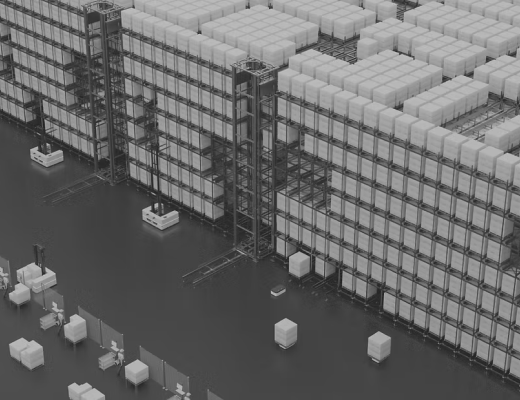
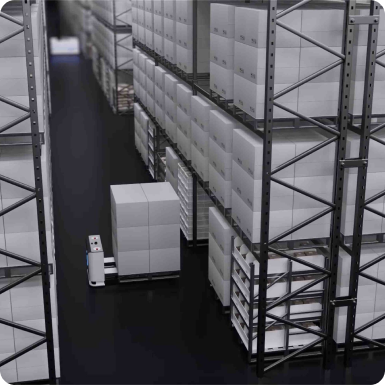
The U-BOT and R-BOT are seamlessly integrated to enable "front-end buffering and rear storage" operations. The U-BOT replaces multiple conventional handling devices such as elevators, conveyors, and AGVs, while the R-BOT efficiently manages rear storage tasks. Compared to conventional 4-way shuttle warehouses, this solution significantly improves picking accuracy and efficiency, making it the optimal choice for customers seeking maximum storage density and fast, precise picking performance.
01Advantages of the U-BOT + R-BOT Storage System
- This ultra-efficient, high-density storage and picking solution combines the U-BOT omni-directional stacker robot with the R-BOT 4-way shuttle, enabling front-end picking and rear storage operations.
- With dual control integration via PTP Smart Warehouse Software, the system achieves exceptional operational efficiency and space utilization, resulting in superior picking accuracy and throughput compared to traditional shuttle-based solutions.

- High-Density Storage
-
- - Maximizes space utilization through a “batch-wall” picking configuration
- - No fixed aisles required, allowing greater flexibility in layout

- Ultra-Efficient Operations
-
- - Fast picking without unpacking, tailored to diverse customer needs
- - Multi-depth racking structure for optimized storage and picking efficiency
- - Intelligent scheduling ensures seamless collaboration between R-BOT inside racks and U-BOT outside racks

- Rapid ROI
-
- - 2–3 years
- - Faster and simpler deployment compared to standalone 4-way shuttle warehouses
- - Eliminates need for costly conveyors and lifting devices, reducing investment costs

- Flexible Deployment
-
- - Front-end conveyor lines are not required, enabling more adaptable warehouse layouts
- - Scalable design allowing easy addition or removal of U-BOTs and R-BOTs based on order volumes
- - Supports phased implementation and expansion without operational disruptions
* The "batch-wall" approach enables multi-depth, high-density item placement without dedicated aisles, maximizing space utilization while enhancing picking efficiency.
Inbound Process
- STEP 01
- Inbound pallets are delivered to the receiving point via forklift. The PDA initiates the inbound task, and the WMS requests storage allocation.

- STEP 02
- The U-BOT receives instructions and transports pallets from the inbound point to designated storage locations.
- STEP 03
- The R-BOT moves from its staging point to the cache area at the rack front, transferring pallets to assigned positions. Pallets for higher locations are moved via elevator if needed.
- STEP 04
- Upon completion, the R-BOT reports task status, and the backend system updates inventory information in real time.
Outbound Process
- STEP 01
- Based on order information or warehouse plans, the WMS issues outbound tasks, and the WCS schedules R-BOT operations.
- STEP 02
- The R-BOT retrieves pallets from storage and moves them to the outbound staging point. High-level pallets are pre-positioned using an elevator.
- STEP 03
- The U-BOT collects pallets from the R-BOT and places them in the outbound zone for manual or automated picking operations.
- STEP 04
- After picking is complete, remaining pallets are returned to storage, and the WMS updates inventory records.
02Key Features & Benefits
01
Multiple Gantry Heights
U-BOT supports gantry heights of 4.5m, 6m, and 8m to match warehouse specifications.
02
Wide Temperature Range
R-BOT operates in environments from -25°C to 45°C, handling various pallet sizes.
03
3D Depth Cameras
Intelligent pallet recognition and automatic deviation correction for precise handling.
04
Smart Charging Stations
Real-time monitoring of charging status with built-in safety protection.
05
Multi-Container Compatibility
Supports mixed storage of large, medium, and small containers to meet diverse needs.
06
Multi-Function Workstations
Enables piece-picking operations using robotic arms or manual stations, integrating seamlessly with loading docks.
03Example Data Simulation
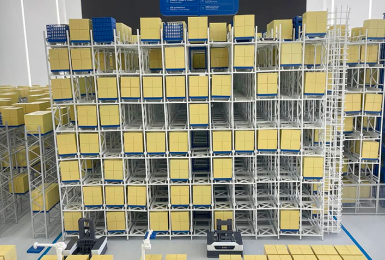
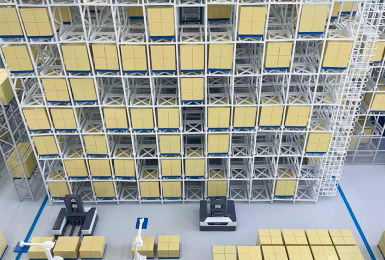
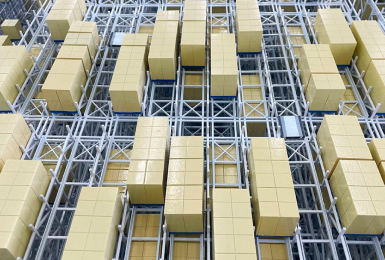
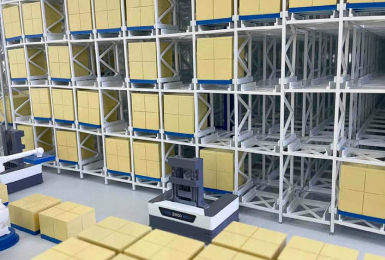
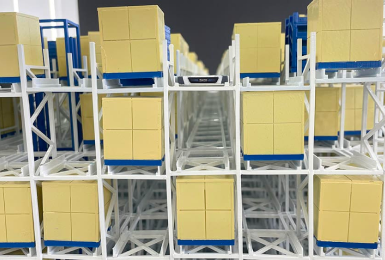
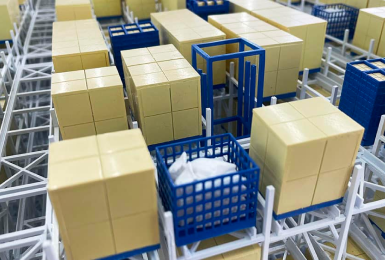
- Warehouse Size
- L60m x W20m x H130m
- System Composition
- U-bot2, R-bot5, H-bot*1
- Storage Positions (Cells)
- 3432
- Applicable SKUs
- ≤10000
- Inbound/Outbound Efficiency
- ≥60 pallets/hour
- Picking Efficiency
- ≥200 pieces/hour
- Investment Cost
- 600,000 USD+
* This configuration provides a high-capacity, efficient solution adaptable to a wide range of warehouse sizes and operational demands.
04Application Areas
Scenarios

Warehouse Height (N.H.)
≤30m

SKU Volume
Medium

Storage Density
High

Inbound/Outbound Efficiency
High

Picking Efficiency
High
Industries Served

Food & Beverage

3PL (Third-Party Logistics)

E-commerce

Cold Chain Logistics

Retail

Energy

Pharmaceutical

Apparel
05System Components
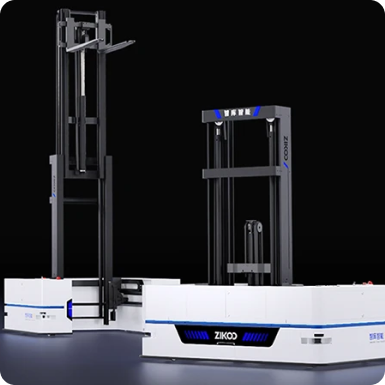
U-BOT Omni-Directional Stacker Robot
R-BOT 4-Way Shuttle
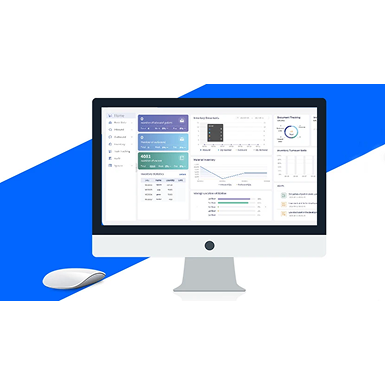
PTP Smart Warehouse Software
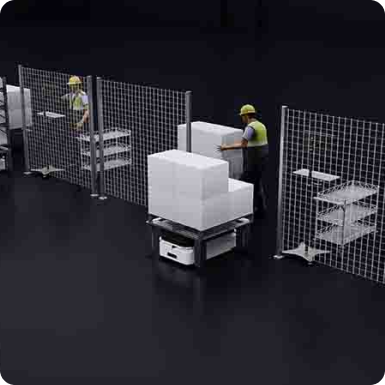
Multi-Function Workstation
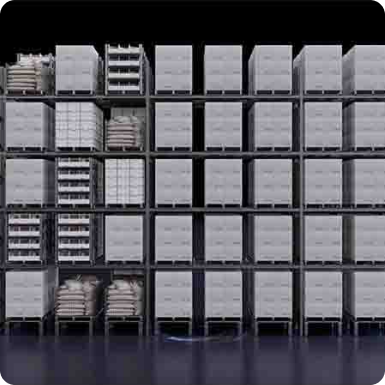
Pallet Racking System