


Cross Belt Sorter
-
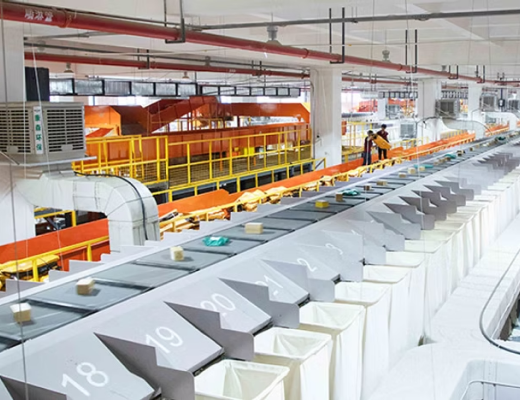
The Cross Belt Sorter (CBS) is a conveyor-based sorting system that features a series of small, independently operated, bi-directional conveyor belts (carriers) mounted horizontally along a continuous track. Each carrier can discharge items at a 90° angle, enabling the creation of high-density sorting destinations compared to other sorting technologies.
CBS is particularly well-suited for handling parcels, garments, and small or delicate items that require careful handling. With its ability to set multiple sorting points and operate at high speeds, CBS is widely adopted in the e-commerce and parcel delivery industries, where mixed products need to be processed quickly and efficiently.The CBS-based sorting system is one of the most popular and proven sorting technologies available today. Its main advantage lies in its high throughput capacity and the ability to configure numerous sorting destinations within a compact layout.
A standard CBS loop can process up to 12,000 parcels per hour (PPH). For higher capacities, multi-level CBS loops can be implemented, doubling, tripling, or quadrupling throughput with 2-, 3-, or 4-tier configurations.
Different carrier sizes and pitches are available to accommodate various parcel dimensions. For larger parcels, a dual-belt per carrier setup can be used, and a Heavy-Duty CBS configuration is available for handling parcels up to 50 kg.All CBS systems support manual, semi-automatic, or fully automated induction methods. Depending on operational requirements, they can be equipped with 1 to 6-sided scanning, Video Coding Systems (VCS), and Optical Character Recognition (OCR) technologies for enhanced sorting accuracy and efficiency.
Key Features of Cross Belt Sorter
- - Ideal for Small and Delicate Items: Designed for sorting parcels, garments, and other small or hard-to-handle products.
- - High Throughput: Capable of processing a wide variety of items at high speeds.
- - High-Density Sortation Points: Allows for more sortation destinations compared to other systems, maximizing sorting efficiency.
- - Low Operating Costs: Efficient design reduces energy consumption and maintenance expenses.
- - Simple Mechanical Structure: Minimizes complexity, improving reliability and ease of maintenance.
- - Flexible System Integration: Easily adaptable to existing layouts or new facility designs.
Main Applications
- - Inbound Sorting: Efficiently directs incoming parcels to designated areas.
- - Inbound Putaway: Organizes received items for storage with precision.
- - Order Fulfillment: Streamlines picking and sorting for customer orders.
- - Cross-Docking: Enables fast transfer of items between incoming and outgoing shipments.
- - Outbound Shipping: Sorts products for final dispatch and delivery.
Typical Sortation Items
- - Small retail products
- - Apparel and accessories
- - Jewelry and valuables
- - Envelopes and small packages
- - Small electronics and gadgets
- - Health and personal care products
- - Single-piece or individual SKUs
01Composition of a Cross Belt Sorter System
-
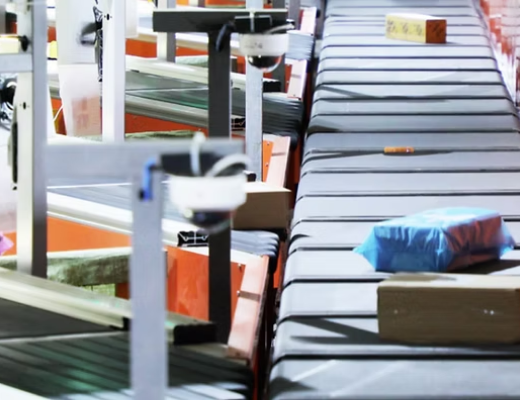
A Cross Belt Sorter system consists of four main components: the Induction Conveyor (infeed section), the Cross Belt Carrier (sorter host), the Chute (outfeed section), and the Control System. Parcels are fed into the system via the induction conveyor, transferred to the sorter host, and directed to their designated chutes under the control of the system, where they are discharged to complete the sorting process.
- - Induction: The infeed section that introduces parcels onto the sorter system.
- - Cross Belt Carrier: The main sorter mechanism responsible for transporting parcels and discharging them bi-directionally or uni-directionally at sortation points.
- - Chute: The discharge area where items are sorted into their designated destinations.
- - Control System: Manages and coordinates the entire sorting process, ensuring accuracy and high throughput.
- Induction (Infeed Section)
-
The induction system is designed to achieve high efficiency and accuracy for the sorter host. Its function is to automatically measure the physical parameters of each item to be sorted, identify its information, and ensure it is fed onto the high-speed sorting carriers in proper synchronization. The Simba Cross Belt Sorter System offers customized induction solutions tailored to the operational environment, available in fully automatic, semi-automatic, or manual modes.
- - Infeed section for product entry
- - Automatic measurement of parcel size and weight
- - Barcode information identification
- - Precise feeding of items onto the sorter line
- - Manual, semi-automatic, or fully automatic feeding options
- Cross Belt Carrier (Sorter Host)
-
The sorter host is the core component responsible for executing the system’s sorting operations. It transfers items carrying sorting information to the appropriate sorting destination based on logical instructions. The Simba Cross Belt Sorter System utilizes servo direct-drive technology, enabling millisecond-level response times. This ensures that items remain centered on the carrier during both induction and discharge, achieving a sorting accuracy rate of 99.99%.
- - Executes movement and sorting tasks based on information collected from the induction unit
- - Supports both bidirectional and unidirectional discharge operations
- Chute (Discharge Unit)
-
The discharge system is the final stage of the sorting process. The chute temporarily holds items transferred by the sorter host before they are dispatched. During this stage, the items' information is scanned and transmitted to the main control system. Depending on the type of items being processed, different discharge methods can be used, such as chutes, bag racks, or roll cages.
- - Final stage of the sorting system
- - Utilizes chutes, bag racks, or roll cages according to the characteristics of the sorted items
- Control System
-
The control system acts as the brain and nervous system of the entire sorting process. It integrates technologies such as mobile power supply, wireless communication, fieldbus, OPC communication, industrial Ethernet communication, PLC servo control, and frequency conversion. This system not only coordinates the operation of each functional module but also provides communication capabilities to exchange data and management policies with higher-level management systems.
- - Serves as the central intelligence and communication hub of the sorting system
- - Utilizes mobile power supply, wireless communication, fieldbus, OPC communication, industrial Ethernet, PLC servo, and frequency conversion technologies
02Simba Cross Belt Sorter System Features

High
Efficiency

Maximum throughput:
12,000 PPH

Energy-saving
type loop drive

Speed:
1.2 – 2.5 m/s

Modular
design

Sorting accuracy:
99.99%

Drive mode:
Linear Induction Motor

Low-noise
operating mechanism

Carrier drive:
Power Roller with Servo Motor

Numerous customers in e-commerce, express, apparel industrie
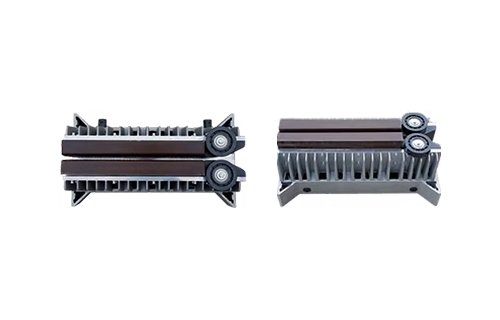
Energy-saving Loop Drive (Linear Motor)
- - High-performance line set
- - Bi-directional solenoid drive (wheel guide)
- - High thermal conductivity aluminum heat transfer material
- - High-density heat flow exhaust and cooling technology
- - Integrated module technology
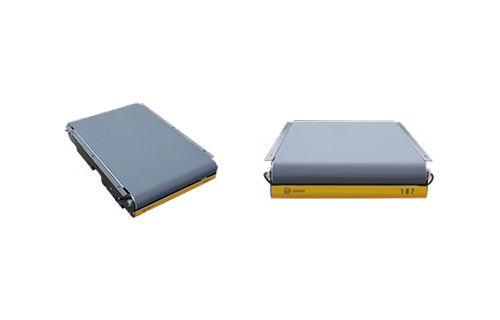
Cross Belt Carrier
- - Modular design for quick disassembly and maintenance
- - Modular structure design with quick assembly and disassembly technology allows carrier replacement in just 5 minutes, ensuring very easy maintenance
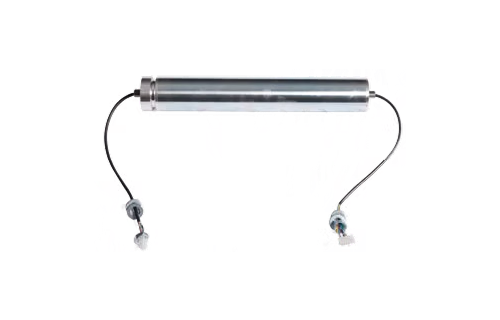
Cross Belt Servo Electric Roller Direct Drive Technology
- - Plus counting replaces traditional synchronous drive to ensure accurate product alignment
- - Use of servo electric roller drive ensures precise infeeding and outfeeding performance
- - Starts within milliseconds, guaranteeing faster and more efficient operation
- - Simplified body structure provides advantages of space saving, weight reduction, and lower energy consumption
- - Easy installation and maintenance
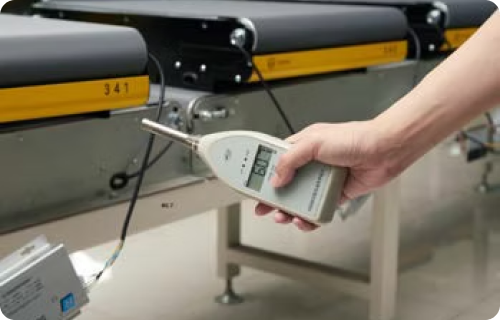
Low-noise High-speed Operation
- - Maintains noise levels below 72dB through the perfect combination of an optimized structure, low-noise running mechanism, and ultra-lightweight aluminum body.
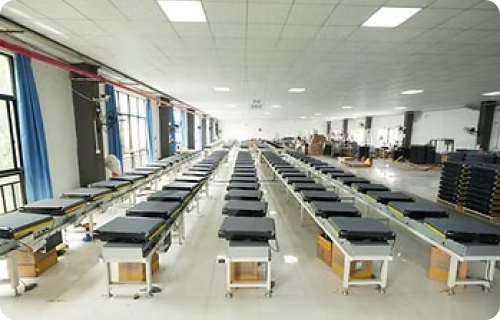
Short Lead Time
- - For a cross belt sorter with 300 carriages:
Production period: 7 days
Installation period: 20 days
Commissioning period: 7–20 days
Key Performance Parameters
- Induction Throughput
- 1500 - 3500pcs/h
- Sorting Throughput
- 12,000 - 80,000pcs/h
- Induction System
- Automatic, Semi-auto induction and Manual Induction
- Drive Mode
- Linear motor / Synchronous motor
- Incline and Decline Angle
- ±12°
- Carrier Size
-
- 600×700 mm (Belt surface 430 mm, 600 pitch)
- 1100×700 mm (Belt surface 400 mm, 1 carrier with 2 belts)
- Parcel Weight
- Min. 50g / Max. 50kg
- Parcel Type
- Carton, Package, Soft Pack
- Operating Noise
- < 72dB
- Parcel Size
- Min. 100*50*1mm / Max. 900*600*600mm
- Carrier Drive
- Power roller / Servo motor
- Sorting Accuracy
- > 99.99%
- Carrier Pitch
- 500/600/800/1000/1100mm
- Speed
- 1.2 - 2.5m/s