


High-Density Storage System with Narrow Aisle Optimization
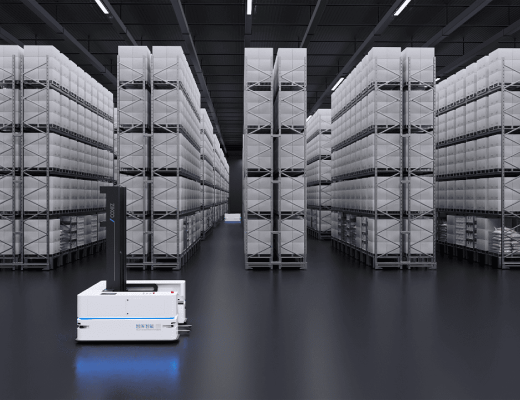
U-BOT – Omnidirectional Autonomous Stacker Robot
-
PDF Download
Using the U-BOT omnidirectional autonomous stacking robot, entire pallets can be stored and retrieved within the warehouse, while piece-level picking operations are also supported. Compared to counterweight-type stacking AGVs¹, overall operational efficiency improves by up to 30%. The system can maneuver in extremely narrow aisles, offers easy installation, and ensures fast deployment. It is the ideal solution for customers seeking to upgrade manual forklift-based warehouses to achieve higher storage density.
1) Counterweight-Type Stacking AGV An AGV equipped with an additional counterweight system to stabilize its center of gravity, enabling safe and efficient handling of heavy or unbalanced loads during autonomous stacking operations.
01Advantages of the U-BOT Storage System
- The U-BOT storage system utilizes U-BOT four-way stacking robots to support both pallet handling and piece-picking operations.
- It maximizes space utilization with aisles as narrow as 2.1 meters and vertical storage heights of up to 8 meters. Combined with PTP Smart Warehouse Software, it enhances inventory management efficiency and optimizes inbound and outbound workflows. This solution ensures high labor efficiency and delivers a fast return on investment (ROI) for warehouse operations.

- Ultra-High-Density Storage
-
- - Operates in aisles as narrow as 2.1m, maximizing horizontal space usage
- - Supports 0–8m vertical stacking, optimizing warehouse height utilization
- - Compatible with various container sizes for flexible storage

- High Operational Efficiency
-
- - Direct inbound processing without unpacking requirements
- - Fast travel and fork extension speeds with a small turning radius for quick maneuvering

- Fast ROI
- Achieves return on investment within 1–2 years

- Quick & Easy Deployment
- Ideal for retrofitting existing forklift-operated warehouses without rack replacement

- Scalable & Flexible
-
- - Easily increase or reduce the number of robots based on demand
- - Supports phased implementation without interrupting ongoing operations
- - Multiple navigation modes adaptable to changing warehouse environments
Inbound Workflow
- STEP 01
- Goods are received and manually checked, then consolidated onto pallets.

- STEP 02
- PDA scans initiate inbound storage requests; WMS allocates storage locations and links with the U-BOT RCS.
- STEP 03
- RCS dispatches an available U-BOT to handle the task.
- STEP 04
- U-BOT transports goods to the designated storage location.
- STEP 05
- WMS updates inventory data; U-BOT returns to charging or awaits the next task.
Outbound Workflow
- STEP 01
- WMS generates outbound tasks based on order information.
- STEP 02
- RCS assigns an available U-BOT to retrieve pallets from designated positions.
- STEP 03
- U-BOT transports pallets to the outbound cache location; WMS updates data.
- STEP 04
- U-BOT proceeds to charging or standby mode.
02Features and Benefits
01
Customizable Gantry Heights
4.5m / 6m / 8m options to suit different warehouse profiles.
02
3D Depth Sensing
Advanced cameras detect pallet positions, auto-correcting deviations for precise placement.
03
Smart Charging Stations
Real-time monitoring with safety protections.
04
Container Flexibility
Supports various pallet and container sizes for diverse storage needs.
05
Multi-Function Workstation Compatibility
Enables both pallet handling and piece-picking, smoothly integrated with dock platforms for loading/unloading operations.
03Data Simulation Example
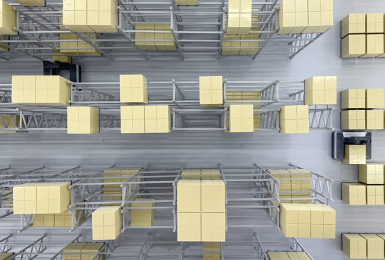
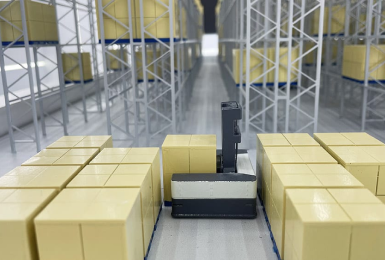
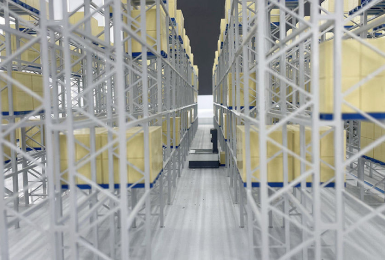
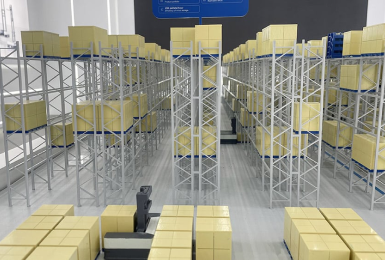
- Warehouse Size
- L60m x W20m x H10m
- System Configuration
- U-bot*2
- Storage Locations
- 1680
- Applicable SKUs
- ≤1680
- Throughput
- ≥50 pallets/hour
- Investment
- USD 150,000+
* Example scenario for a specific warehouse size and requirements
04Application Areas
Scenarios

Warehouse height
≤ 10m

High SKU variety

High-density storage

High inbound/outbound

High picking efficiency
Industries Served

3PL (Third-Party Logistics)

Cold Chain Logistics

Retail

Energy

Manufacturing

Apparel

Food & Beverage

E-commerce
05System Components
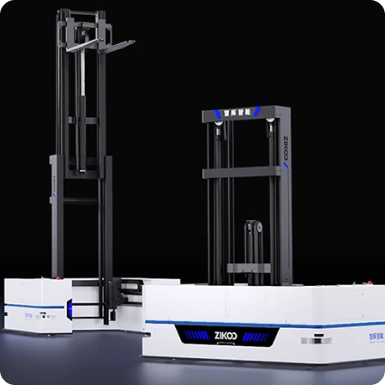
U-BOT Omnidirectional Autonomous Stacker Robots
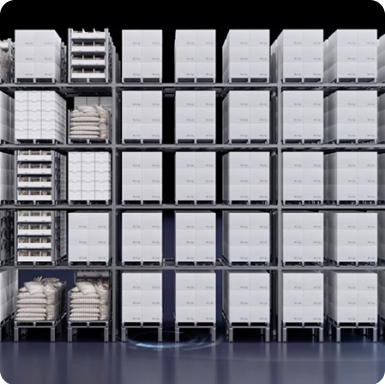
Pallet Racking System
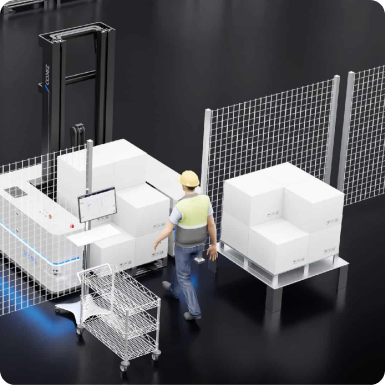
Multi-Function Workstations
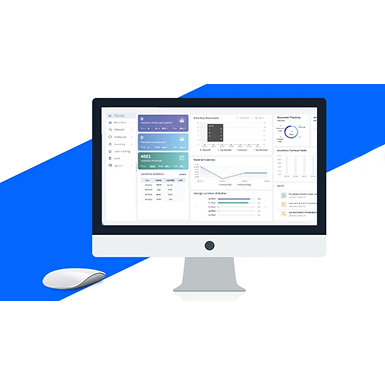
PTP Smart Warehouse Software